
- You are here:
- Home »
- Class Schedule
Class Schedule

Electrification & Home Performance Series: 2 – Moisture & Ventilation (Webinar)
Wednesday 10/15/2025 10:00 AM – 12:00 PM
Non-Invasive Refrigerant Charge Verification of Existing HVAC Systems (Webinar)
Thursday 10/23/2025 9:00 AM – 11:30 AM
Electrification & Home Performance Series: 3 – Air Sealing & Insulation (Webinar)
Wednesday 11/12/2025 10:00 AM – 12:00 PM
Wednesday 12/3/2025 10:00 AM – 12:00 PM
Electrification & Home Performance Series: 5 – How Tight is Too Tight? (Webinar)
Wednesday 12/17/2025 10:00 AM – 12:00 PM
Electrification & Home Performance Series: 6 – Testing Residential Building Pressure (Webinar)
Thursday 1/15/2026 10:00 AM – 12:00 PM
Electrification & Home Performance Series: 7 – Integrating Heat Pump Water Heaters (Webinar)
Thursday 1/29/2026 10:00 AM – 12:00 PM
Electrification & Home Performance Series: 8 – Water Conservation & Home Performance (Webinar)
Thursday 2/12/2026 10:00 AM – 12:00 PM
Class Overview: Long-term forecasts point to persistent drought conditions in California for 2015 and beyond. Residential water conservation will become increasingly important as the state faces shortages. This course covers traditional and new methods for water conservation, emerging technologies, efficient appliances and standards including the new DOE water heater standards, and residential (and commercial) incentive programs across utilities in Southern California. Landscaping alternatives: xeriscaping, water conservation drips tapes, timers, controllers, etc.
Objectives: Understand importance of residential water conservation in California. Gain knowledge about efficient conservation technologies and techniques. Gain awareness of residential water conservation programs in Southern California.
Audience: Building contractors; building professionals; residential DIY consumers; building department officials; energy efficiency professionals
Class Overview: A residential split system air conditioner undergoes its final assembly at the time of installation. An important factor is the amount of refrigerant in the system (commonly referred to as proper charging). Air conditioner energy efficiency suffers if the refrigerant charge is either too low or too high. This training is designed to assist HERS Raters and HVAC technicians to properly perform a Refrigerant Charge verification. This is a Hands-on class with operational equipment. Please feel free to bring your verification equipment.
Class Overview:
This is a full day class. As more and more attention is given to Air Sealing of Homes in California what basics should everyone who is part of the audit team to the Air sealing team know as they prepare to seal Homes. The course deals with basic Air and moisture flow. The purpose is to assist prevention of homes that develop avoidable problems with some planning , understanding of moisture, pressure and heat flow dynamics. This is recommended for each HERS Rater, Mechanical Contractor or Building official involved in an Air Sealing Project.
Class Overview:
This 1/2 day class covers Manual ‘J’ Sizing Introduction Manual ‘J’ Wrightsoft Set-up and hands on training Detailed Cooling Capacity Data Sheets Air Flow Calculation Worksheets.
Class Overview:
This 1/2 day class covers Manual S, Sizing of Residential Equipment based on Manual S and the California title 24 Part 6 parameters. Material includes: Reference App JA-II, Various Manufacture Equipment Data sheets, a PowerPoint with a step-by-step work through, and a Wrightsoft Computer element, Other ACCA Approved Software is being brought into the training at this time.
Class Overview: This training session covers issues and cautions that anyone involved in air sealing needs to consider when tightening a residential structure. It builds upon the principles in Building Energy Science Basics 100. A checklist of inspection points is provided as part of the training.
Class Overview: Day 1 – Building Energy Science I CLASSROOM: Review basic Energy Science and Pressure Diagnostics, Manometer Law and Manometer Usage HANDS ON*: Blower Door, includes four set-up stations and both TEC and Retrotec 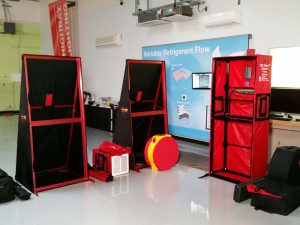 equipment using multiple manometers. Includes both Pressurization and Depressurization Techniques. Duct Testing Total Leakage and Leakage to Outside Multiple opportunities to set up check the equipment operation procedures.
Career Paths: HERS Raters, BPI Contractors, Energy Auditors, Energy Analysts, Architects, Builders and Building Professionals, HVAC Contractors and Technicians, Utility Program Sponsors, Facility and Energy Managers, and Building Officials.
Audience: HERS Raters, BPI Contractors, Energy Auditors, Energy Analysts, Architects, Builders and Building Professionals, HVAC Contractors and Technicians, Utility Program Sponsors, Facility and Energy Managers, and Building Officials.
NATE Certified
Class Overview: Day 2 – Building Energy Science II CLASSROOM: Discuss ‘Static Pressure and Airflow, Air Flow Measurement Techniques-Plenum Pressure Matching Method, Flow Hood, Flow Grid.’ HANDS ON: Measurements-Static 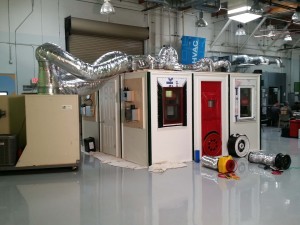 Pressure and Airflow, Using The equipment approved in California. Fan watt draw and Airflow using Retrotec and TEC equipment.
Career Paths: HERS Raters, BPI Contractors, Energy Auditors, Energy Analysts, Architects, Builders and Building Professionals, HVAC Contractors and Technicians, Utility Program Sponsors, Facility and Energy Managers, and Building Officials.
Audience: HERS Raters, BPI Contractors, Energy Auditors, Energy Analysts, Architects, Builders and Building Professionals, HVAC Contractors and Technicians, Utility Program Sponsors, Facility and Energy Managers, and Building Officials.
NATE Certified
Class Overview: This class will feature free equipment calibration. Attendees will have the opportunity to check HVAC, 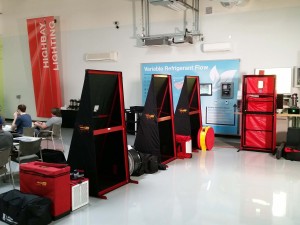 blower door and duct tester equipment calibrations. Instructor Gary Wollin will show attendees how to apply the principles for calibrating digital thermometers, refrigerant gauges (P/T) and pipe clamps used for checking pipe temperatures for both the liquid and suction lines. Attendees will be shown the field test procedure for digital manometers and be able to check personal manometers against newly calibrated manometers. Duct blaster inspections for proper airflow will also take place. There will be a demonstration on how to maintain duct blaster equipment including cleaning and checking for damage, and misalignment of the fan and plugged orifices.
Class Overview: Day 3 – Building Energy Science III CLASSROOM: Discuss ‘Refrigerant Charge’ and ‘Equipment Calibration’. HANDS ON*: Combine the Airflow techniques with Refrigerant charge procedures, Multiple opportunities to 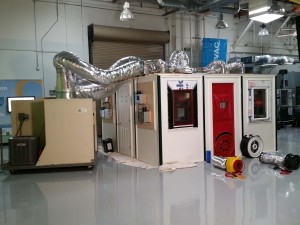 practice on various pieces of equipment.
Career Paths: HERS Raters, BPI Contractors, Energy Auditors, Energy Analysts, Architects, Builders and Building Professionals, HVAC Contractors and Technicians, Utility Program Sponsors, Facility and Energy Managers, and Building Officials.
Audience: HERS Raters, BPI Contractors, Energy Auditors, Energy Analysts, Architects, Builders and Building Professionals, HVAC Contractors and Technicians, Utility Program Sponsors, Facility and Energy Managers, and Building Officials.
NATE Certified