
- You are here:
- Home »
- Class Schedule
Class Schedule

Electrification & Home Performance Series: 2 – Moisture & Ventilation (Webinar)
Wednesday 10/15/2025 10:00 AM – 12:00 PM
Non-Invasive Refrigerant Charge Verification of Existing HVAC Systems (Webinar)
Thursday 10/23/2025 9:00 AM – 11:30 AM
Electrification & Home Performance Series: 3 – Air Sealing & Insulation (Webinar)
Wednesday 11/12/2025 10:00 AM – 12:00 PM
Wednesday 12/3/2025 10:00 AM – 12:00 PM
Electrification & Home Performance Series: 5 – How Tight is Too Tight? (Webinar)
Wednesday 12/17/2025 10:00 AM – 12:00 PM
Electrification & Home Performance Series: 6 – Testing Residential Building Pressure (Webinar)
Thursday 1/15/2026 10:00 AM – 12:00 PM
Electrification & Home Performance Series: 7 – Integrating Heat Pump Water Heaters (Webinar)
Thursday 1/29/2026 10:00 AM – 12:00 PM
Electrification & Home Performance Series: 8 – Water Conservation & Home Performance (Webinar)
Thursday 2/12/2026 10:00 AM – 12:00 PM
Class Overview: This class will feature free equipment calibration. Attendees will have the opportunity to check HVAC, 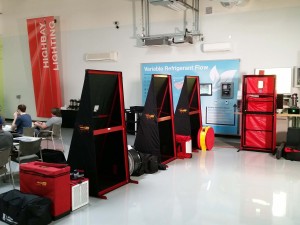 blower door and duct tester equipment calibrations. Instructor Gary Wollin will show attendees how to apply the principles for calibrating digital thermometers, refrigerant gauges (P/T) and pipe clamps used for checking pipe temperatures for both the liquid and suction lines. Attendees will be shown the field test procedure for digital manometers and be able to check personal manometers against newly calibrated manometers. Duct blaster inspections for proper airflow will also take place. There will be a demonstration on how to maintain duct blaster equipment including cleaning and checking for damage, and misalignment of the fan and plugged orifices.
Class Overview: Day 3 – Building Energy Science III CLASSROOM: Discuss ‘Refrigerant Charge’ and ‘Equipment Calibration’. HANDS ON*: Combine the Airflow techniques with Refrigerant charge procedures, Multiple opportunities to 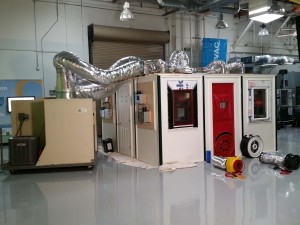 practice on various pieces of equipment.
Career Paths: HERS Raters, BPI Contractors, Energy Auditors, Energy Analysts, Architects, Builders and Building Professionals, HVAC Contractors and Technicians, Utility Program Sponsors, Facility and Energy Managers, and Building Officials.
Audience: HERS Raters, BPI Contractors, Energy Auditors, Energy Analysts, Architects, Builders and Building Professionals, HVAC Contractors and Technicians, Utility Program Sponsors, Facility and Energy Managers, and Building Officials.
NATE Certified
Class Overview: Day 4 – Building Envelope I CLASSROOM: Discuss ‘Combustion Analysis’, ‘Room to Room Pressure Diagnostics’ and ‘Duct Leakage Diagnostics’. HANDS ON*: 80 and 95 AFUE Combustion analysis, and Room to Room 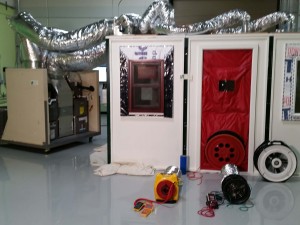 pressure diagnostics including Duct Leakage Diagnostics, (finding leaks with a manometer).
Objectives: HERS Raters, BPI Contractors, Energy Auditors, Energy Analysts, Architects, Builders and Building Professionals, HVAC Contractors and Technicians, Utility Program Sponsors, Facility and Energy Managers, and Building Officials.
Audience: HERS Raters, BPI Contractors, Energy Auditors, Energy Analysts, Architects, Builders and Building Professionals, HVAC Contractors and Technicians, Utility Program Sponsors, Facility and Energy Managers, and Building Officials.
NATE Certified
Class Overview: Day 5- Building Envelope II CLASSROOM: Discuss ‘Thermal Bypass and Quality Insulation Installation’, ‘Thermal Imaging’. HANDS ON*: Inspect a wall section, working some of the areas discussed, Use an IR camera and review 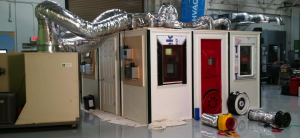 the results, using a hot wall for the training.
Career Paths: HERS Raters, BPI Contractors, Energy Auditors, Energy Analysts, Architects, Builders and Building Professionals, HVAC Contractors and Technicians, Utility Program Sponsors, Facility and Energy Managers, and Building Officials.
Audience: HERS Raters, BPI Contractors, Energy Auditors, Energy Analysts, Architects, Builders and Building Professionals, HVAC Contractors and Technicians, Utility Program Sponsors, Facility and Energy Managers, and Building Officials.
NATE Certified
Class Overview:
A residential split system air conditioner undergoes its final assembly at the time of installation. An important factor is the amount of refrigerant in the system (commonly referred to as proper charging). Air conditioner energy efficiency suffers if the refrigerant charge is either too low or too high. This training is designed to assist Raters and HVAC technicians to properly perform a Refrigerant Charge verification. This is a Hands-on class with operational equipment. Please feel free to bring your verification equipment.
Class Overview:
Learn advanced Manometer settings while conducting a Blower Door test. We will cover methods used to identify and prioritize build shell leakage. Students will learn to set up BD, Manometer, hoses and house in order to conduct a total shell leakage. Learn to calculate the Building Airflow Standard (BAS). We will also cover the importance of comparing the BD results with the BAS when recommending air sealing. Participants will practice methods in field guided by instructor.
Class Overview:
This class will consist of a 5-6 hour guided study session for the EPA 608 exam, followed by a closed book, on-line certification exam. This certification is required for all raters who wish to perform refrigerant charge verification. The cost of the exam is $50. The 5-6 hour guided study session and study guide are free. If you already own the Mainstream Engineering EPA 608 study guide, you only need to pay the test fee. We will NOT be covering the Type I or Type III materials. We will only be covering the Core materials and the Type II materials. You are free to take whatever parts of the exam you want to, but HERS raters only need to be Type II certified to perform refrigerant charge verification for Title 24 purposes.
Class Overview:
This training will go into depth on how to conduct a Combustion Safety Test (CST) in the Combustion Appliance Zone CAZ under Worst Case Depressurization (WCD).
The following topics are covered:
- How to prep the CAZ
- Set up pressure gauges, measure and record baseline pressure and WCD pressures
- Firing heating appliances and identifying if the appliances will draft within 60 seconds
- Conducting measured draft and CO Reading at steady state
- Scenarios if the appliances fail CST
- Steady state and/or ambient CO problems
- Identifying potential venting problems
- Recommendation based on Combustion air venting tables
Class Overview:
This four hour session covers the science and application of airflow principles to the efficient operation of HVAC equipment. Many of the residential systems in California suffer from the inefficiencies caused by high static pressure. Included in this training is a hands-on portion designed to compare various filters, fittings and layout issues that cause high static pressures.